Britain’s road safety debate has reached a difficult but unavoidable conclusion: the speeds we accept on our roads are often too high for the risks involved. While recent proposals to reduce certain speed limits to 50mph have sparked strong reactions, the core issue goes far beyond inconvenience or public frustration.
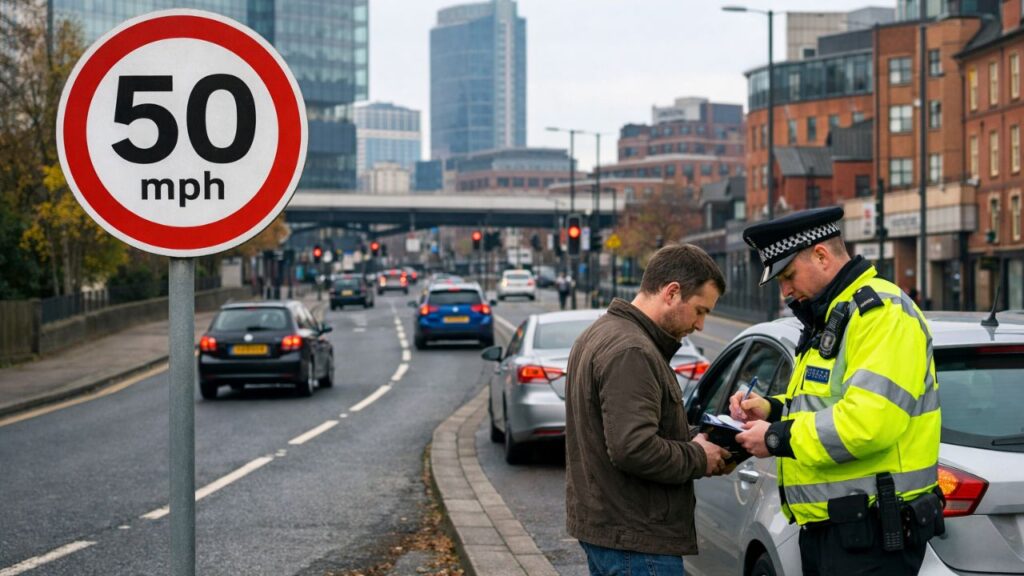
Many drivers argue that lower speed limits will increase travel time, worsen congestion, and restrict personal freedom. However, this perspective overlooks a more critical reality. Reduced speed limits are not simply policy choices—they are grounded in safety evidence and real-world outcomes.

Tragic Cases Highlight Real Consequences
The urgency of this issue is underscored by recent tragedies. The case of Javonnie Tavener, who received a sentence of less than four years after causing the death of four-year-old Mayar Yahia, serves as a stark reminder of what is at stake. Incidents like these are not isolated; they reflect systemic risks embedded in everyday driving conditions.

Such events shift the conversation from theoretical debate to human impact. Behind every statistic is a life lost or permanently changed, and families left to cope with irreversible consequences.
Evidence From Wales Shows Measurable Impact
Wales provides a compelling example of how reduced speed limits can improve safety. The introduction of a default 20mph limit in built-up areas faced widespread criticism and public resistance. Despite this, early data reveals meaningful improvements.
Reports indicate a nearly 12% reduction in overall casualties, with approximately 100 fewer people either killed or seriously injured in 2024. Additionally, average speeds dropped by around 3.8mph, demonstrating that even modest reductions can influence outcomes significantly.
Speed Reduction Data Overview
| Metric | Before Change | After Change |
|---|---|---|
| Default Urban Speed Limit | 30mph | 20mph |
| Average Speed | Higher baseline | Reduced by 3.8mph |
| Casualty Rate | Higher | Down by nearly 12% |
| Serious Injuries/Deaths | Higher numbers | ~100 fewer cases (2024) |
Why Small Speed Changes Matter
Scientific evidence consistently shows that as speed increases, the likelihood and severity of injury rise sharply. Even small reductions in speed can dramatically improve survival rates. A difference of just a few miles per hour can determine whether a collision results in minor injury or fatal consequences.
This makes proposals to reduce higher speed limits—such as lowering 70mph zones to 50mph on certain roads—appear less extreme and more aligned with established safety principles.
Fuel Crisis Plans Add Another Dimension
In addition to safety concerns, speed reductions are also being considered as part of broader national planning. Reports suggest that under emergency fuel shortage scenarios, the government could introduce temporary lower speed limits to reduce petrol consumption.
These “light-touch” measures highlight how speed regulation can serve multiple purposes, from conserving fuel to enhancing public safety.
 UK State Pension Age Reform 2026: What Proposed Changes Could Mean for Workers and Retirees
Modern Cars Do Not Eliminate Risk
Some critics argue that advancements in vehicle safety technology justify maintaining higher speeds. While modern cars are indeed safer for occupants, this argument fails to account for those outside the vehicle.
Pedestrians, cyclists, and other road users remain vulnerable. The physics of impact has not changed, and higher speeds still translate into greater force and reduced reaction time, increasing the likelihood of severe outcomes.
Driver Behaviour and Cultural Norms
Another key factor is driver behaviour. Many motorists already exceed speed limits or drive too fast for road conditions. Lower limits, when properly enforced, help redefine what is considered acceptable driving behaviour.
Over time, this can shift cultural expectations, encouraging safer habits across the board.
Balancing Time and Safety
It is true that lower speeds may increase journey times slightly. However, in most cases, the difference amounts to minutes rather than significant delays. When weighed against the potential to save lives, this trade-off becomes far easier to justify.
The contrast is clear: a small increase in travel time versus the prevention of serious injuries and fatalities.
Rethinking Progress on the Roads
For decades, speed has been associated with efficiency and progress. Slower movement has often been viewed as a step backward. However, in today’s complex and crowded road environments, this mindset no longer holds.
True progress should be measured by safety and sustainability, not just speed. A road system that prioritises human life over marginal time savings represents a more responsible and modern approach.