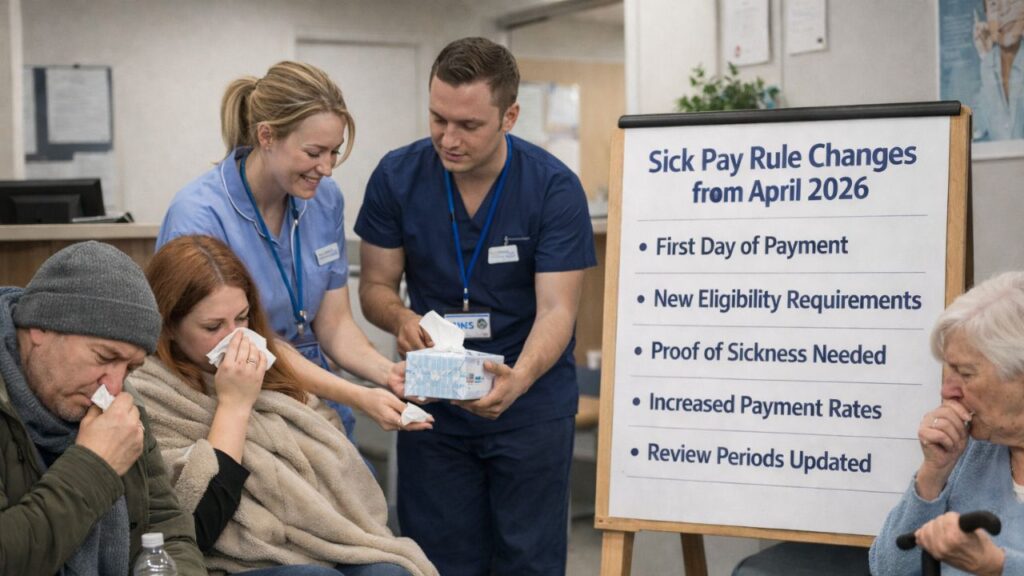
From next month, workers taking time off due to illness will see a major update to Statutory Sick Pay (SSP). The government has confirmed that SSP will now be paid from the very first full day of absence, starting April 6, and eligibility will be expanded to include more employees.
Support For Low-Income Workers
According to the Department for Business and Trade, these changes are designed to provide better financial protection for lower-paid workers when they are unwell. The move is also expected to reduce workplace infections by encouraging employees to take necessary sick leave without financial worry.

Removal Of Key Restrictions
Two important restrictions are being removed under the new rules. The Lower Earnings Limit, which previously excluded some low-income workers, will no longer apply. In addition, the three-day waiting period before SSP could be claimed has been scrapped, allowing payments to begin immediately.
 DWP Benefit Repayment Orders 2026: 1,400 People Asked to Return Payments Amid Legal Concerns
New Payment Calculation Method
The updated system will calculate Statutory Sick Pay at 80 percent of an employee’s average weekly earnings or the standard flat weekly rate, depending on which amount is lower.
Impact Of Employment Rights Changes
These updates follow research by Acas into reforms under the Employment Rights Act. The study highlighted that these employment law changes will significantly affect both employers and employees across the UK.
Employer And Worker Concerns
Employers identified new paternity leave rights as one of their main concerns, while workers focused more on changes to flexible working. Acas stated that these insights will help guide support and advice for businesses and staff during the transition.

Acas Statement On Upcoming Reforms
Acas Chief Executive Niall Mackenzie described the Employment Rights Act as a major shift in workplace law. He emphasized the importance of understanding the new regulations and confirmed that Acas will continue providing updated guidance and training to support both employers and workers.
Survey Findings On Sick Pay Changes
The research revealed that 43 percent of employers believe first-day sick pay will have the biggest impact on their operations. Similarly, 36 percent of workers also viewed this change as the most significant.
Unfair Dismissal Rule Update
Another major reform includes reducing the qualifying period for unfair dismissal protection from two years to six months. This change was highlighted by 31 percent of employers and 30 percent of employees as a key concern.
Key Changes Effective April 6
Statutory Sick Pay will be available to all eligible employees regardless of earnings.
Payments will start from the first full day of sickness absence.
SSP will be calculated at 80 percent of average weekly earnings or the flat rate, whichever is lower.
 UK Free Bus Pass Rules From 19 March 2026: What Residents Should Check Under New Eligibility Changes