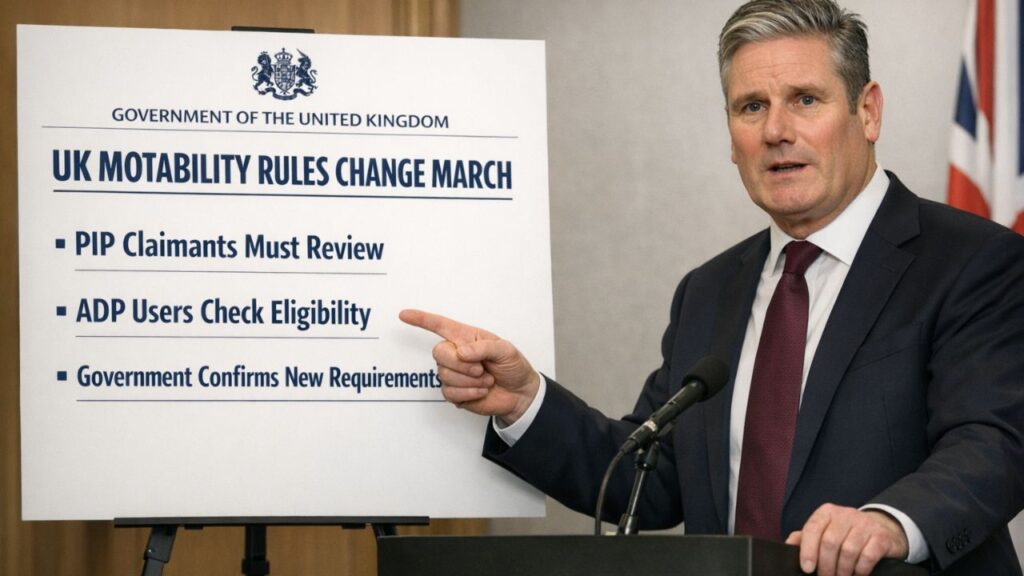
The Motability Scheme, which helps millions of people in the UK, is going through the biggest change in its administration and finances in more than ten years. The Department for Work and Pensions (DWP) and Motability Operations have finished writing new rules that will directly affect how people who get Personal Independence Payment (PIP) and Adult Disability Payment (ADP) can get and keep their cars. These rules will go into effect in March 2026. The main goal of providing mobility is still the same, but the rules about vehicle choice, tax breaks, and digital monitoring have changed.
This is not a time for claimants to be complacent. To avoid getting hit with surprise costs or having your lease end early, you need to understand these updates. Here is everything you need to know and do right now, whether you are already in a lease or want to start one.

The rise in payments in advance
One of the first things users will notice this March is a big change in the way “Advance Payment” works. A one-time payment made in advance is needed for bigger or more expensive vehicles that cost more than the usual mobility allowance.

Motability has warned that the average Advance Payment is likely to go up by about £400 over a standard three-year lease because the government is going to change tax breaks. These tax changes, such as getting rid of zero-rate VAT on top-up payments, won’t fully take effect until July 2026. However, prices for new orders this March are already starting to reflect these higher costs of doing business.
Safety measures for people who use wheelchairs
The government has confirmed that Wheelchair Accessible Vehicles (WAVs) will keep many of their current protections, which is a very important safety measure for people with the most physical needs. For example, the 20% VAT that will soon apply to Advance Payments on standard cars will not apply to cars that have been heavily and permanently modified for wheelchair or stretcher users.
This exemption is very important news for people who need bigger, more expensive vehicles to carry their equipment. But for people who drive regular SUVs or hatchbacks, the “luxury” part is being replaced by models from companies like Nissan, Toyota, Vauxhall, and Mini that are more practical, reliable, and easy to get to.
New digital tracking and telematics
The new rules for 2026 will make more use of “telematics,” digital monitoring systems that are put in cars. In the past, telematics was only used for certain younger drivers, but the program is now expanding its use to make sure that cars are only being used in accordance with the strict “Fair Use” policy.
The Motability Scheme lets up to three named drivers use the car, but it is very important that the car is only used for the disabled person’s benefit. The DWP and Motability Operations are now keeping a closer eye on how people use the service to look for signs of abuse. If you break these rules, your lease could be canceled right away, and you could be banned from the program for good.
The increase in benefits in April 2026
For people who get PIP or ADP, the financial viability of a lease is directly related to their weekly allowance. The DWP has confirmed that starting in April 2026, disability benefits will go up by about 3.8% to keep up with inflation.
The Enhanced Mobility rate for PIP and ADP will go up from £77.05 to £80.00 per week. This rise gives you a little more breathing room, but keep in mind that a full lease usually “swallows” the whole mobility part. So, the uprating doesn’t give the claimant more money; it just keeps up with the rising costs of the lease.
More help for electric cars
The rules for 2026 make the move to electric vehicles (EVs) even more important. Motability has made it easier to install home chargers. If you lease your first EV through the program, the cost of a home charging point and its normal installation are now fully covered.
The program has made it easier for people who don’t have off-street parking to use subscription-based public charging networks. Data from early 2026 shows that EV drivers on the scheme can save an average of £225 a year on running costs compared to drivers of petrol or diesel cars. “Range anxiety” is becoming less of a problem for PIP and ADP claimants now that more than 50 electric models can go more than 300 miles on a single charge.
Named driver rules and flexibility for caregivers
In the past, there were strict geographical limits on where a nominated driver could live in relation to the claimant. The March 2026 update makes things more sensible by making it easier to add caregivers who may live a little farther away to the insurance policy.
But this freedom means that people will be watching you more closely. The DWP has said again that the claimant doesn’t always have to be in the car; for example, a caregiver can use it to go shopping for the claimant. However, the main purpose must always be the claimant’s freedom and mobility. If a named driver uses the car mostly to get to and from work, that is against the rules.

Help with failed tests during the transition period
A lot of people are worried about what will happen if they lose their “Enhanced Rate” mobility award after a DWP review or the ongoing “Timms Review” into PIP. The 2026 guidance says that transitional support is still available.
If you lose your mobility award, Motability Operations will get in touch with you to talk about what you can do. If you return the car in good condition within eight weeks of your last allowance payment, you may be able to get a financial grant of up to £1,000, depending on when you joined the scheme. You can also keep the car for up to 26 weeks and get a lower transitional payment of £500 to help you find other ways to get around.
Ordering now and the “Price Freeze”
The most important thing you can do this March if your lease is about to end is to look at the new price list right away. When you order from Motability, the price you see is the price you pay, even if the car doesn’t arrive until after the price goes up. This is called a “Price Freeze” policy.
Ordering a car now will lock you into the current, lower tax-free rates because the 20% VAT on advance payments and the 12% Insurance Premium Tax (IPT) are coming up in July 2026. For people who don’t have a lot of money, there are still almost 100 choices with £0 or very low Advance Payments. These include well-known models like the Mazda 2 Hybrid and the electric Vauxhall Frontera.
How to use the new vehicle catalog
To keep the program “sustainable and fair for taxpayers,” several high-end luxury brands have been taken out of the 2026 catalog. The focus has returned to cars that are the most affordable and easy to get into.
People who are making a claim should go to their local Motability-accredited dealer this month to test drive these new “priority” models. To lower the hidden costs of disability, many features that used to cost extra, like special pedals or steering aids, are now in the “inclusive” category.
Sharing data with DWP in real time
The connection between Motability and the DWP is better than ever in 2026. This means that if your benefits are cut, raised, or stopped, the information is sent right away.
Claimants need to make sure that both the DWP and Motability Operations have their correct contact information. You must tell the scheme right away if you are moving from DLA to PIP or from PIP to the new ADP system in Scotland. This will keep your lease payments from being late.
A time of calm before July
Even though there will be new rules in March 2026, the “big hit” from the tax changes won’t happen for a few more months. This gives PIP and ADP claimants a very important “window of opportunity.” You can avoid the average £400 increase in upfront costs and get a car that meets your needs for the next three years by acting now.
The Motability Scheme is still a “great value” compared to the private leasing market, but the time of “cost-free” luxury leases is coming to an end. The main goals for 2026 are to be practical, environmentally friendly, and make sure that people with the most needs, especially those who use wheelchairs, stay safe.
Last things to do for claimants
Every claimant should do the following to stay ahead of the changes in March 2026:
- Check when your lease ends: If it ends in 2026, think about ordering before the tax changes in July.
- Check out the £0 Advance Payment list. There are still almost 100 affordable options this quarter.
- Change the names of your drivers: Make sure your drivers live close enough and know the rules for “Fair Use.”
- Think about switching to electric: Use the free home charger and save money on running costs.
- Check your benefit award: Make sure you still have at least 12 months left on your enhanced mobility award.
The Motability Scheme is still an important way to stay independent. You can stay mobile and financially secure through 2026 and beyond by following these new rules and being proactive with your lease.